- Weekly.health
- Posts
- Issue 29: Stop guessing, here’s your personalised macronutrient target
Issue 29: Stop guessing, here’s your personalised macronutrient target
The latest nutrition research and actionable tips to improve your health and an introduction to calculating your macronutrient requirements.

James K
January 16, 2026
In partnership with

Welcome to Weekly.health’s 29th issue. Every week, we explore cutting-edge research, actionable advice, and science-backed nutrition insights to help you live longer and healthier.
Our aim is to help you live another 10 healthy years and cut your risk of age-related disease.
🗒️ In This Issue:
📚 Books We’re Reading Right Now
📈 Research Digest: What’s new in nutrition science
📊 We’re considering something new. Your input matters
🔥 Calculate your BMR (try our free tool)
🧮 Macro Calculator: Stop guessing your macros
🛍️ Recommendations
📘 Glossary of Terms: Definitions for technical terms in this issue
📚 Books We’re Reading Right Now
 | If you read just one book to future-proof your health, make it How Not to Age by Dr Michael Greger. Dr Greger - the physician behind How Not to Die and NutritionFacts.org - is known for one thing: turning hard science into practical, life-extending habits. Every claim he makes is rooted in peer-reviewed research, not hype. In How Not to Age, he reveals what truly slows biological ageing, from protecting your brain and heart to preserving muscle and energy. It’s a science-backed guide to living not just longer, but better. Weekly.health may be compensated when you buy. Your purchase helps to support us to continue this newsletter. |
📈 Research Digest: What’s New in Nutrition Science
Here’s the best of recent nutrition research:
🧠 Metabolic health matters for your brain
In over 1,300 adults aged 60+, higher insulin resistance (measured by METS-IR from blood sugar, fats and BMI) was linked to worse memory, attention and thinking speed. Cognitive decline became noticeably steeper once METS-IR rose above ~28–33. Translation: poor blood sugar and lipid control may quietly harm brain health. Keeping weight, glucose and cholesterol in check could help protect cognition as you age. (source)
🧬 Two nutrients, two clean-up systems for healthy ageing
This recent review shows urolithin A and spermidine support cellular recycling, but via different routes. Urolithin A (best studied at 500–1,000 mg/day) targets mitophagy, clearing damaged mitochondria to improve energy, muscle strength and endurance. This is especially relevant as mitochondrial function declines with age. Spermidine (≈1–2 mg/day) activates broader autophagy, helping cells clear waste more generally, with links to better heart health, brain ageing and longevity. Not everyone produces urolithin A from food due to gut differences, so supplements may matter, while dietary spermidine levels are typically quite low. Used alongside exercise and good nutrition, they appear complementary rather than interchangeable. (source)
🧠 Vitamin balance matters for brain health as we age
In over 2,500 adults aged 60+, higher blood levels of vitamin D and folate were linked to a 25–30% lower risk of cognitive impairment. But vitamin B12 followed a U-shaped curve: both low and very high levels were associated with worse cognition—especially in people with kidney stones, hypertension or metabolic issues. Takeaway: optimise vitamin D and folate, but don’t megadose B12 without good reason. (source)
⏰ Eating earlier may sharpen thinking in older adults
In a 12-week randomised trial of adults aged ~74 with mild cognitive impairment, a 15:9 time-restricted eating pattern (eating between 8am–5pm, fasting overnight) improved overall cognition and memory compared with eating freely. MoCA scores rose by ~1.7 points, and word-recognition memory improved, without weight loss or muscle loss. Adherence was high and no side effects were reported. This suggests meal timing rather than calories may support brain health in ageing. (source)
📊 We’re considering something new. Your input matters
One question we hear regularly from readers is: I understand the research, but how does it apply to me?
We’re considering offering a small number of one-off, personalised nutrition reports, written by the nutrition writers behind Weekly.health.
How this would work (if we go ahead):
You’d fill out a detailed form about your diet, lifestyle, and goals
We’d personally review and analyse your responses
You’d receive a written report with clear, evidence-based, actionable recommendations, tailored to your situation
This would be more like a structured, written consultation, not a course, programme, or ongoing coaching.
These would be paid reports. Before building anything, we want to be very honest and ask about realistic interest, not hypothetical interest.
Here’s the personalised reports we’re currently considering;
🧭 Personal Nutrition & Health Baseline
A personalised assessment of how your current diet and habits stack up, and which changes would matter most for you.⚡ Energy, Fatigue & Brain Fog Review
An analysis of likely nutrition and lifestyle factors affecting your energy or focus, with specific next steps.🧬 Longevity & Healthspan Nutrition Priorities
A tailored report identifying the most important nutrition levers for long-term health, based on your age, habits, and priorities.🍽️ Appetite, Hunger & Eating Pattern Review
A personalised look at what may be driving hunger, cravings, or overeating — and how to improve appetite regulation without rigid dieting.⚖️ Weight Loss & Body Recomposition Review
Personalised guidance on fat loss and body recomposition, including how to lose weight while maintaining (or building) muscle.💊 Supplement Stack Reality Check
A personalised review of what you’re taking, what’s likely useful, what’s unnecessary, and what to prioritise.
(This is just to guide what we build, if anything. There’s no obligation.)
Optional follow-up
If you’d like, you can also reply to this email with:
which report you’d be most interested in, or
what would make something like this more useful for you
That feedback will directly shape whether, and how, we proceed.
🔥 Calculate your BMR (try our free tool)
Do you know how many calories your body needs just to exist?
Your basal metabolic rate (BMR) is the number of calories your body burns each day at complete rest — breathing, circulating blood, maintaining organs, repairing cells. No steps. No workouts. Just staying alive.
Why does this matter?
Because BMR is the foundation of almost every nutrition decision:
Trying to lose fat without under-fueling
Eating enough to support muscle, hormones, and recovery
Avoiding “mystery plateaus” where weight or energy stalls
Understanding why two people of the same size can need very different intakes
If you don’t know your BMR, you’re guessing, often by hundreds of calories per day.
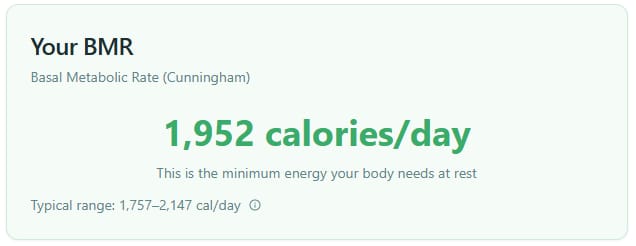
I’ve just calculated mine using our BMR calculator over at The Healthspan Academy BMR calculator (screenshot above). It takes less than a minute and gives you a personalised baseline you can actually use, whether your goal is fat loss, muscle, or long-term health and longevity.
Once you know your number, everything else - protein targets, calorie ranges, even meal planning - becomes clearer and far easier to get right.
🟢 Sponsor: Pique Life
The New Year Ritual That Sets the Tone for Energy and Glow ✨
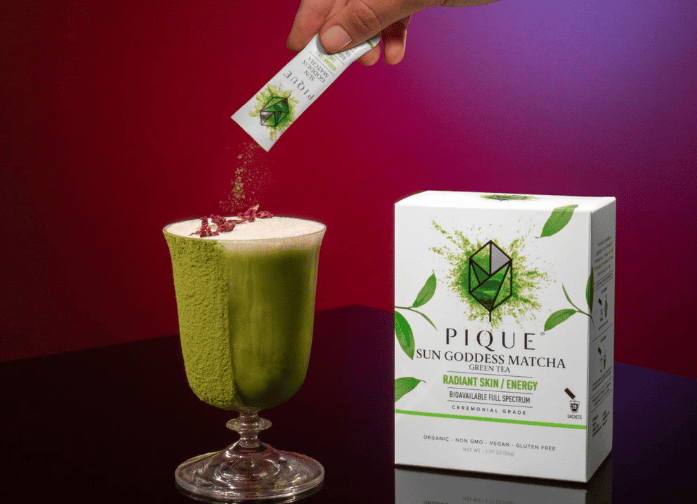
January calls for rituals that actually make you feel amazing—and Pique’s Sun Goddess Matcha is mine. It delivers clean, focused energy with zero jitters, supports glowing skin and gentle detox, and feels deeply grounding. Smooth, ceremonial-grade, and crave-worthy, it’s the easiest way to start your day clear, energized, and glowing from the inside out.
🧮 Macro Calculator: Stop guessing your macros
Most people don’t struggle because they “don’t know what healthy eating is”.
They struggle because their nutrition has no clear structure. Some days are protein-heavy by accident. Other days are mostly carbs and snack-food. Then progress feels random. Energy dips, hunger creeps up, and motivation takes the blame.
That’s what macros are good for.

Macros (protein, carbs, fat) are the three big levers that shape:
how full you feel after meals
how stable your energy is across the day
how well you recover if you train (or just have a physically demanding life)
whether your diet supports fat loss, maintenance, or muscle gain
Why use our Macro Calculator?
1) It turns “eat better” into numbers you can use
Not a diet. Not a rulebook. Just daily targets you can build meals around so you’re not relying on vibes.
2) It helps you choose the approach that fits your life
Our calculator gives you three simple presets you can start with:
Balanced (a sensible default for most people)
Low Carb (if you feel better with fewer carbs and higher fats)
High Protein (if satiety and muscle maintenance are priorities)
You can then tweak the sliders and instantly see what changes without needing to do any maths.
3) It converts percentages into real food targets
Percentages are abstract. Grams are actionable.
The tool automatically shows your daily targets in grams of protein, carbs, and fat, based on your calorie goal.
4) It keeps nutrition quality in view (not just numbers)
Right under your macro targets, we include a daily fibre target (25–30 g), because better health outcomes usually come from consistently eating more fibre-rich foods (vegetables, fruit, legumes, whole grains), not just “hitting macros”.
5) It adapts to how you train
At the bottom, you’ll see quick guidance for different training styles, for example:
endurance-heavy weeks often do better with more carbs
strength-focused goals often benefit from a higher-protein bias
mixed training, or no training at all, tends to do well on Balanced
It’s a small thing, but it stops people using the same macro split for every goal and every week.
How to use it (without turning your life into a spreadsheet)
Set your daily calories (or bring them over from your TDEE result)
Choose Balanced / Low Carb / High Protein
Adjust the sliders until it feels realistic
See the exact breakdown of how much of each macro you should consume every day
➡️ Try it now: go to Tools → Macro Calculator in The Healthspan Academy and get your personalised macro targets in under a minute.

🛍️ Recommendations
Discover the products, services, and retailers we’ve mentioned in past Weekly Health issues, all in one place so you can explore at your own pace.
🇬🇧 UK Readers Osavi Omega-3 Oil – Contains 2,450mg EPA and DHA per teaspoon Merach Exercise Bike – The exact exercise bike we use at Weekly.health Piper’s Farm – Award-winning 100% grass-fed meats for better flavour and nutrition. Get £10 off your first order. Abel & Cole – Fresh, organic fruit and veg boxes to make healthy eating easier. 50% off your first four boxes. Oddbox – Help fight food waste with weekly deliveries of delicious “wonky” veg. £10 off your first box. Crowdfarming – Adopt a fruit tree and enjoy regular deliveries. Get 10€ credit when you join. Citizens Of Soil – Use code WKLYOLIVE10 for 10% off small-batch, high-antioxidant extra virgin olive oils. The Mediterranean Diet Cookbook For Beginners – 100 irresistible recipes, a 14-day meal plan, and practical tips for shopping, cooking, and living the Mediterranean way. The Official MIND Diet Book: – A scientifically based programme to support weight loss and brain health. Longvida Curcumin Supplement – One of the best-supported curcumin formulas in human studies. Use code weeklyhealth for 15% off £30+. Dash Diet Cookbook For Busy People – Nutritious, 5-ingredient recipes that make healthy eating stress-free. Keto Diet Cookbook – Your 30-day plan to lose weight, boost brain health, and balance hormones. Lifespan by Dr. David Sinclair – One of the world's leading researchers on ageing lays out the science behind why we age and what we can do to slow it down. | 🇺🇸 USA Readers Carlson Finest Fish Oil - Contains 1,300mg EPA and DHA per teaspoon. Merach Exercise Bike – The exact exercise bike we use at Weekly.health Blueprint – Get $25 off high-phenolic extra virgin olive oil. The Mediterranean Diet Cookbook For Beginners – 100 irresistible recipes, a 14-day meal plan, and practical tips for shopping, cooking, and living the Mediterranean way. The Official MIND Diet Book – A scientifically based programme to support weight loss and brain health. Longvida Curcumin Supplement – One of the best-supported curcumin formulas in human studies. Dash Diet Cookbook For Busy People – Nutritious, 5-ingredient recipes that make healthy eating stress-free. Keto Diet Cookbook – Your 30-day plan to lose weight, boost brain health, and balance hormones. Lifespan by Dr. David Sinclair – One of the world's leading researchers on ageing lays out the science behind why we age and what we can do to slow it down. |
Weekly.health may be compensated when you buy something. Your purchase helps to support us to continue this newsletter. We only suggest products or brands we trust and where supported by evidence.
📥 Finding this newsletter useful so far?
Your friends could benefit, too!
It would really help us if you could share Weekly.health with your friends either in person or through social media. You could even just forward this email to them.
Every subscriber helps us towards our goal of improving lives and helping people live longer.
🙏 Thanks for Reading!
That’s the end of this issue of Weekly.health.
This newsletter is written by a small, independent team, led by James — who’s been following nutrition science for nearly 20 years and is now working towards a formal, industry-recognised qualification.
We’re based in England, so if you’re over the pond, you might notice a few strange spellings.
Our goal is to make cutting-edge, evidence-based nutrition advice simple, useful, and genuinely applicable to everyday life.
We don’t want to bombard you with adverts, but a few of the links in this email may reward us when you click and make a purchase. This goes towards helping us to continue bringing you this newsletter.
We’ll keep improving with every issue. If you’ve got any feedback or suggestions, we’d love to hear them (just reply to this email).
See you next week!
📖 Glossary of Terms in This Issue (Alphabetical Order)
A–Z Glossary of Technical Terms
Term | Definition |
|---|---|
Metabolic health | How well your body manages blood sugar, blood fats, weight/waist, blood pressure, and inflammation. |
Insulin resistance | When cells respond less effectively to insulin, so the body needs more insulin to control blood sugar. |
METS-IR | A calculated insulin-resistance score derived from routine measures (commonly fasting glucose, triglycerides, HDL cholesterol, and BMI). |
Blood glucose | The amount of sugar in your bloodstream. |
Lipids | Fats in the blood, mainly cholesterol and triglycerides. |
BMI | Body Mass Index: weight relative to height (kg/m²). |
Cognitive function | Mental abilities like memory, attention, processing speed, and planning. |
Cognitive decline | A gradual worsening of cognitive function over time. |
Mild cognitive impairment (MCI) | Noticeable cognitive changes beyond normal ageing, but not severe enough to be dementia. |
Randomised trial | A study where people are randomly assigned to different groups to compare outcomes fairly. |
Time-restricted eating (TRE) | Eating within a set daily time window and fasting the rest of the day/night. |
15:9 eating pattern | A TRE schedule: 15 hours fasting and 9 hours eating. |
MoCA score | Montreal Cognitive Assessment: a screening test score used to measure overall cognitive performance. |
Urolithin A | A compound made from certain foods by some gut microbes (or taken as a supplement) that may support mitochondrial health. |
Spermidine | A naturally occurring compound found in foods (and supplements) linked to cellular maintenance and recycling pathways. |
Autophagy | The cell’s recycling system that breaks down and reuses damaged or unnecessary components. |
Mitophagy | A form of autophagy that specifically removes damaged mitochondria. |
Mitochondria | Structures inside cells that produce energy and influence metabolism and ageing-related processes. |
Gut microbiome | The community of microbes living in your gut that helps process food and affects health. |
Vitamin D | A fat-soluble vitamin/hormone involved in bone, immune, and muscle function, and linked to brain health in some studies. |
Folate (vitamin B9) | A B-vitamin needed for DNA synthesis and red blood cell formation. |
Vitamin B12 | A B-vitamin important for nerve function and blood cell production; too low or very high levels can signal issues in some contexts. |
U-shaped relationship | When risk is higher at both low and high levels, with a “sweet spot” in the middle. |
Cognitive impairment | Measurable problems with thinking or memory that affect function to some degree. |
Basal metabolic rate (BMR) | The calories your body burns at rest to keep you alive (breathing, circulation, organ function). |
Total daily energy expenditure (TDEE) | The total calories you burn in a day, including resting needs plus activity and digestion. |
Macros (macronutrients) | The three main nutrients that provide energy: protein, carbohydrate, and fat. |
Protein | A macronutrient that supports muscle maintenance, recovery, and satiety. |
Carbohydrates (carbs) | A macronutrient that provides glucose, a key fuel source for the body and brain. |
Dietary fat | A macronutrient important for hormones, cell structure, and absorption of fat-soluble vitamins. |
Fibre | Non-digestible carbohydrate that supports gut health, satiety, and cardiometabolic health. |
Body recomposition | Losing fat while maintaining or gaining muscle. |
Supplement stack | The combination of supplements someone takes regularly. |
Healthspan | The years of life spent in good health and functional ability. |
Biological ageing | The rate of physiological ageing in the body, which can differ from chronological age. |
Peer-reviewed research | Research evaluated by independent experts before publication. |
Reply