- Weekly.health
- Posts
- Issue 28: How much protein do you need? Find out now
Issue 28: How much protein do you need? Find out now
The latest nutrition research and actionable tips to improve your health and an introduction to calculating your protein intake requirements.

James K
January 09, 2026
In partnership with

Welcome to Weekly.health’s 28th issue. Every week, we explore cutting-edge research, actionable advice, and science-backed nutrition insights to help you live longer and healthier.
Our aim is to help you live another 10 healthy years and cut your risk of age-related disease.
🗒️ In This Issue:
📚 A brief note
📚 Books We’re Reading Right Now
📈 Research Digest: What’s new in nutrition science
🔥 Calculate your BMR (try our free tool)
🥩 How much protein do you need? Calculate it in just a few steps.
🛍️ Recommendations
📘 Glossary of Terms: Definitions for technical terms in this issue
📚 A brief note
Weekly.health has been around for more than 6 months, and we wanted to share a quick, honest update.
From the outside, it’s reasonable to assume that a newsletter like this — with affiliate links, book recommendations, and now educational tools and courses — comfortably pays for itself.
In reality, it doesn’t. In practice, each issue currently generates only a small amount of revenue - often around £5, and sometimes less - yet costs significantly more to produce.
Each issue takes several hours of research, reading, and synthesis, and while revenue has slowly increased, Weekly.health still runs at a net loss per issue once platform costs and research tools are accounted for. We’ve worked hard to streamline production and keep costs sensible, but growth itself increases those costs faster than it increases revenue.
The newsletter isn’t going away, and we’re committed to keeping it independent, evidence-based, and accessible, but our goal during 2026 is to make it sustainable to run. If you find value in the work and would like to help make it sustainable, one simple way to do so is via Buy Me A Coffee. Even a single coffee genuinely makes a difference.
There’s absolutely no expectation — your time and attention already mean a great deal. We’re grateful you’re here.
You can still support us by selecting from our recommended books and products below.
📚 Books We’re Reading Right Now
 | If you read just one book to future-proof your health, make it How Not to Age by Dr Michael Greger. Dr Greger - the physician behind How Not to Die and NutritionFacts.org - is known for one thing: turning hard science into practical, life-extending habits. Every claim he makes is rooted in peer-reviewed research, not hype. In How Not to Age, he reveals what truly slows biological ageing, from protecting your brain and heart to preserving muscle and energy. It’s a science-backed guide to living not just longer, but better. Weekly.health may be compensated when you buy. Your purchase helps to support us to continue this newsletter. |
📈 Research Digest: What’s New in Nutrition Science
Here’s the best of recent nutrition research:
🥣 Greek yoghurt may support bones when paired with movement
In adults aged 55+, eating two 175 g servings of 0% Greek yoghurt daily for 8 weeks meaningfully increased protein and calcium intake—key nutrients many older adults underconsume. While bone markers didn’t improve short term, results hint yoghurt may influence bone turnover alongside exercise and inflammation without harm. Practical takeaway: use Greek yoghurt as an easy protein-calcium boost, especially if you’re active, but don’t expect rapid bone changes. (source)
🍳 Eggs could be a simple sleep and nutrition win during perimenopause
This narrative review suggests eggs may help support sleep, appetite, and muscle health in perimenopausal women thanks to their mix of high-quality protein, choline, tryptophan, vitamin D, and antioxidants. Two eggs provide ~12 g protein and ~200 IU vitamin D. Evidence is promising but indirect, so eggs aren’t a cure. But they’re a practical, affordable way to bolster evening nutrition while we await better trials. (source)
🧠 Protect your brain if you live with type 2 diabetes
In 564 adults aged 60+, researchers identified three cognitive risk groups, with nearly 67% already impaired or at risk. Poor blood sugar control (HbA1c ≥7%), malnutrition, longer diabetes duration, and low mental stimulation sharply increased risk. Malnutrition raised odds over 30-fold. The takeaway: prioritise stable glucose control, adequate nutrition, and regular mentally engaging activities to help slow cognitive decline alongside diabetes care. (source)
🥗 Protein source matters for heart health in later life
In a 16-week trial of Singaporean older adults, adding 20 g/day of protein to a healthy diet helped protect heart health, but soy protein stood out. While the control group’s triglycerides and CVD risk rose, both protein groups maintained healthy lipid profiles, and the soy group lowered total cholesterol. Takeaway: if boosting protein, plant-based options like soy may offer extra cardiovascular benefits. (source)
🟢 Sponsor: AG1
Stay One Scoop Ahead of the New Year

The new year is the perfect time to build healthy habits that actually stick. AG1 helps you stay one scoop ahead of the new year by supporting energy, gut health, and filling common nutrient gaps, all with a simple daily routine.
Instead of chasing resolutions that are hard to maintain, AG1 makes health easier. Just one scoop each morning supports digestive regularity, immune defense, and energy levels, making it one of the most effortless habits to keep all year long. A fresh year brings fresh momentum, and small daily habits can make a meaningful difference.
Start your mornings with AG1, the daily health drink with 75+ ingredients, including 5 probiotic strains, designed to replace a multivitamin, probiotics, and more, all in one scoop.
For a limited time only, get a FREE AG1 duffel bag and FREE AG1 Welcome Kit with your first AG1 subscription! Only while supplies last. Get started today.
🔥 Calculate your BMR (try our free tool)
Do you know how many calories your body needs just to exist?
Your basal metabolic rate (BMR) is the number of calories your body burns each day at complete rest — breathing, circulating blood, maintaining organs, repairing cells. No steps. No workouts. Just staying alive.
Why does this matter?
Because BMR is the foundation of almost every nutrition decision:
Trying to lose fat without under-fueling
Eating enough to support muscle, hormones, and recovery
Avoiding “mystery plateaus” where weight or energy stalls
Understanding why two people of the same size can need very different intakes
If you don’t know your BMR, you’re guessing, often by hundreds of calories per day.
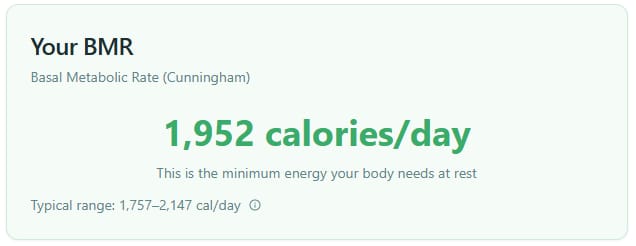
I’ve just calculated mine using our BMR calculator over at The Healthspan Academy BMR calculator (screenshot above). It takes less than a minute and gives you a personalised baseline you can actually use, whether your goal is fat loss, muscle, or long-term health and longevity.
Once you know your number, everything else - protein targets, calorie ranges, even meal planning - becomes clearer and far easier to get right.
🟢 Sponsor: BetterHelp
Take care of YOU - with 25% off therapy

Life triggers anxiety - especially during the holidays! You don’t have to face stress, anxiety, or even depression alone. BetterHelp connects you to a licensed therapist who’s ready to listen and help you navigate whatever you’re going through. The service is 100% online - with the option to chat, video or message anytime.
Now for a limited time BetterHelp is offering 25% off your first month of therapy - and it’s HSA & FSA eligible.
Just over 5 million people who’ve been helped and start your Betterhelp journey today.
This email was delivered by a third-party, on behalf of BetterHelp. Copyright © 2025 BetterHelp. All Rights Reserved. 990 Villa St, Mountain View, California, United States.
🥩 How much protein do you need? Calculate it in just a few steps.

Protein isn’t only “a gym thing”.
Yes, higher protein can support muscle growth, but the bigger healthspan story is simpler: adequate protein helps you maintain strength and lean mass as you age, which is tightly linked to independence, resilience, and a lower risk of frailty.
The problem is, supermarkets are packed with “high-protein” yoghurts, bars, and ready meals, often eaten because they feel healthy, without anyone knowing whether they’re actually helping… or just adding expensive calories.
The baseline (and why it may be too low for healthspan)
In the UK, the Reference Nutrient Intake (RNI) for adults is 0.75 g/kg/day.
In the US, the Recommended Dietary Allowance (RDA) for adults is 0.8 g/kg/day (about 0.36 g/lb/day).
These are best thought of as baseline requirements. These levels are intended to meet the needs of nearly all healthy people, not necessarily the intake that optimises outcomes like strength, body composition, and long-term functional health.
With this newsletter, we want to equip you with the knowledge to optimise your nutrition as much as you want.
Why protein matters for you
Maintaining lean mass and strength
Muscle isn’t just “bulk”. It’s functional capacity, and preserving it is one of the most practical, evidence-backed ways to support healthspan (especially as anabolic responsiveness declines with age). Try to think less about building muscle, and think more about healthy lean mass.Better outcomes during weight loss
If you diet, you don’t only lose fat, but lean mass, too. Losing lean mass reduces your basal metabolic rate (BMR), making losing fat even more difficult. Higher protein intakes help reduce that, especially alongside resistance training.More satisfying meals (often less mindless snacking)
Protein tends to be more satiating than carbs or fat, which can make weight management feel less like willpower.A simple “meal quality” upgrade
When you anchor meals around lean protein sources eggs, yoghurt, fish, chicken, tofu/tempeh, beans + dairy, the rest of the plate usually gets better by default: more fibre-rich plants, fewer ultra-processed “empty” calories.Ageing, frailty, and “useful strength”
Protein isn’t just about looking lean, but about staying able. Adequate protein, alongside some form of strength work, helps support lean mass and function, which are both strongly tied to frailty risk and long-term independence.
Why we built the Protein Calculator
Most people don’t struggle with inadequate protein intakes because they don’t care. They struggle because they’re guessing.
Our Protein Intake Calculator uses your weight, height, age, training level, and goal to give you:
a personalised daily protein target
calories from protein
a practical per-meal target (split across 3 meals)
simple food examples so the number means something in real life
Use it in 30 seconds
Enter your details
Choose your goal (fat loss, maintenance, muscle gain)
Get your daily target + per-meal target
➡️ Try it now: go to Tools → Protein Calculator in The Healthspan Academy and calculate your target in under a minute.

🛍️ Recommendations
Discover the products, services, and retailers we’ve mentioned in past Weekly Health issues, all in one place so you can explore at your own pace.
🇬🇧 UK Readers Osavi Omega-3 Oil – Contains 2,450mg EPA and DHA per teaspoon Merach Exercise Bike – The exact exercise bike we use at Weekly.health Piper’s Farm – Award-winning 100% grass-fed meats for better flavour and nutrition. Get £10 off your first order. Abel & Cole – Fresh, organic fruit and veg boxes to make healthy eating easier. 50% off your first four boxes. Oddbox – Help fight food waste with weekly deliveries of delicious “wonky” veg. £10 off your first box. Crowdfarming – Adopt a fruit tree and enjoy regular deliveries. Get 10€ credit when you join. Citizens Of Soil – Use code WKLYOLIVE10 for 10% off small-batch, high-antioxidant extra virgin olive oils. The Mediterranean Diet Cookbook For Beginners – 100 irresistible recipes, a 14-day meal plan, and practical tips for shopping, cooking, and living the Mediterranean way. The Official MIND Diet Book: – A scientifically based programme to support weight loss and brain health. Longvida Curcumin Supplement – One of the best-supported curcumin formulas in human studies. Use code weeklyhealth for 15% off £30+. Dash Diet Cookbook For Busy People – Nutritious, 5-ingredient recipes that make healthy eating stress-free. Keto Diet Cookbook – Your 30-day plan to lose weight, boost brain health, and balance hormones. Lifespan by Dr. David Sinclair – One of the world's leading researchers on ageing lays out the science behind why we age and what we can do to slow it down. | 🇺🇸 USA Readers Carlson Finest Fish Oil - Contains 1,300mg EPA and DHA per teaspoon. Merach Exercise Bike – The exact exercise bike we use at Weekly.health Blueprint – Get $25 off high-phenolic extra virgin olive oil. The Mediterranean Diet Cookbook For Beginners – 100 irresistible recipes, a 14-day meal plan, and practical tips for shopping, cooking, and living the Mediterranean way. The Official MIND Diet Book – A scientifically based programme to support weight loss and brain health. Longvida Curcumin Supplement – One of the best-supported curcumin formulas in human studies. Dash Diet Cookbook For Busy People – Nutritious, 5-ingredient recipes that make healthy eating stress-free. Keto Diet Cookbook – Your 30-day plan to lose weight, boost brain health, and balance hormones. Lifespan by Dr. David Sinclair – One of the world's leading researchers on ageing lays out the science behind why we age and what we can do to slow it down. |
Weekly.health may be compensated when you buy something. Your purchase helps to support us to continue this newsletter. We only suggest products or brands we trust and where supported by evidence.
📥 Finding this newsletter useful so far?
Your friends could benefit, too!
It would really help us if you could share Weekly.health with your friends either in person or through social media. You could even just forward this email to them.
Every subscriber helps us towards our goal of improving lives and helping people live longer.
📥 Feedback or suggestions?
We really appreciate any feedback you can give. Your feedback can help shape Weekly.health to change lives.
Reply directly to this email - we'd love to hear from you and we’ll be sure to reply!
🙏 Thanks for Reading!
That’s the end of this issue of Weekly.health.
This newsletter is written by a small, independent team, led by James — who’s been following nutrition science for nearly 20 years and is now working towards a formal, industry-recognised qualification.
We’re based in England, so if you’re over the pond, you might notice a few strange spellings.
Our goal is to make cutting-edge, evidence-based nutrition advice simple, useful, and genuinely applicable to everyday life.
We don’t want to bombard you with adverts, but a few of the links in this email may reward us when you click and make a purchase. This goes towards helping us to continue bringing you this newsletter.
We’ll keep improving with every issue. If you’ve got any feedback or suggestions, we’d love to hear them (just reply to this email).
See you next week!
📖 Glossary of Terms in This Issue (Alphabetical Order)
A–Z Glossary of Technical Terms
Term | Definition |
|---|---|
Anabolic resistance | The reduced ability of muscle to respond to protein intake and resistance exercise as we age, requiring higher-quality or higher-dose protein to maintain muscle. |
Basal Metabolic Rate (BMR) | The number of calories your body burns at complete rest to maintain essential functions such as breathing, circulation, and cellular repair. |
Biological ageing | The gradual decline in physiological function over time, influenced by genetics, lifestyle, nutrition, and environment, and not always aligned with chronological age. |
Calcium | An essential mineral required for bone structure, muscle contraction, nerve signalling, and blood clotting. |
Cardiovascular disease (CVD) | A group of conditions affecting the heart and blood vessels, including coronary heart disease and stroke. |
Choline | An essential nutrient involved in brain health, liver function, and cell membrane structure; found in foods such as eggs. |
Cognitive decline | A reduction in cognitive abilities such as memory, attention, or reasoning, which may progress with age or disease. |
Energy balance | The relationship between calories consumed and calories expended, determining weight maintenance, gain, or loss. |
Frailty | A clinical state characterised by reduced strength, endurance, and physiological function, increasing vulnerability to illness and injury. |
HbA1c | A blood marker that reflects average blood glucose levels over the previous 2–3 months; used to assess diabetes control. |
Healthspan | The number of years lived in good health, free from serious disease or disability. |
Lean mass | The weight of the body excluding fat mass, including muscle, bone, organs, and connective tissue. |
Lipid profile | A blood test measuring fats such as cholesterol and triglycerides to assess cardiovascular risk. |
Malnutrition | A state of inadequate nutrient intake or absorption that negatively affects body composition, function, and health outcomes. |
Muscle protein synthesis | The biological process by which the body builds new muscle tissue from amino acids derived from protein. |
Perimenopause | The transitional phase before menopause marked by hormonal fluctuations that can affect sleep, appetite, mood, and body composition. |
Protein quality | A measure of how well a protein source provides essential amino acids in forms the body can effectively use. |
Recommended Dietary Allowance (RDA) | The average daily intake level sufficient to meet the nutrient needs of nearly all healthy individuals in the US. |
Reference Nutrient Intake (RNI) | The UK guideline for nutrient intake that meets the needs of most healthy people. |
Resistance training | Exercise that causes muscles to work against an external force, supporting strength, muscle mass, and metabolic health. |
Sarcopenia | Age-related loss of muscle mass and strength, strongly linked to frailty and reduced independence. |
Satiety | The feeling of fullness and reduced appetite after eating, influenced by meal composition, especially protein and fibre. |
Triglycerides | A type of fat found in the blood; elevated levels are associated with increased cardiovascular risk. |
Tryptophan | An essential amino acid involved in protein synthesis and the production of serotonin and melatonin. |
Type 2 diabetes | A metabolic condition characterised by insulin resistance and elevated blood glucose levels. |
Ultra-processed foods | Industrially formulated foods high in refined ingredients, additives, and energy density, often low in fibre and micronutrients. |
Vitamin D | A fat-soluble vitamin involved in bone health, immune function, and muscle performance, partly synthesised via sunlight exposure. |
Weight maintenance | The state in which calorie intake matches calorie expenditure, resulting in stable body weight. |
Reply