- Weekly.health
- Posts
- Issue 25: Supplement Deep Dive on Curcumin
Issue 25: Supplement Deep Dive on Curcumin
The latest nutrition research and actionable tips to improve your health and a supplement deep dive on curcumin.

James K
December 12, 2025
In partnership with

Welcome to Weekly.health’s 25th issue. Every week, we explore cutting-edge research, actionable advice, and science-backed nutrition insights to help you live longer and healthier.
Our aim is to help you live another 10 healthy years and cut your risk of age-related disease.
🗒️ In This Issue:
📚 Books We’re Reading Right Now
📈 Research Digest: What’s new in nutrition science
🔥 Calculate your BMR (try our free tool)
💊 Supplement Deep Dive: Curcumin
🛍️ Recommendations
📘 Glossary of Terms: Definitions for technical terms in this issue
📚 Books We’re Reading Right Now
 | If you read just one book to future-proof your health, make it How Not to Age by Dr Michael Greger. Dr Greger - the physician behind How Not to Die and NutritionFacts.org - is known for one thing: turning hard science into practical, life-extending habits. Every claim he makes is rooted in peer-reviewed research, not hype. In How Not to Age, he reveals what truly slows biological ageing, from protecting your brain and heart to preserving muscle and energy. It’s a science-backed guide to living not just longer, but better. Weekly.health may be compensated when you buy. Your purchase helps to support us to continue this newsletter. |
📈 Research Digest: What’s New in Nutrition Science
Here’s the best of recent nutrition research:
🧂 Switching your salt could lower blood pressure (no willpower required)
A major Australian position statement recommends a simple swap for people with high blood pressure: replace regular salt with potassium-enriched salt (about 75% sodium, 25% potassium). Evidence from multiple trials shows this lowers blood pressure by ~4–5 mmHg and cuts stroke and heart risk by around 10–13%, with good taste and long-term adherence. It’s not for everyone though, as people with kidney disease or on potassium-raising drugs should check first. (source)
🥛 Protein supplements may protect muscle in bedridden older men
In hospitalised adults aged 60–90 with low muscle mass, adding ~36 g/day of blended whey and casein protein for 3 months increased muscle mass in men (Skeletal Muscle Index ~6.0→6.3 kg/m²), reduced inflammation (IL-6, CRP), and shifted gut bacteria towards amino-acid-producing species linked to muscle growth. Benefits faded after stopping and weren’t seen in women, suggesting sex-specific responses and a gut–muscle link. (source)
🧠 Mediterranean-style diets may support thinking speed and memory in MS
In nearly 1,000 UK adults with multiple sclerosis, greater alignment with Mediterranean or MIND diets was linked to modestly better cognition, especially faster processing speed and stronger word memory. Those with moderate-to-high adherence performed up to ~0.4 standard deviations better on some tasks. Benefits were more pronounced in progressive MS and in people not using disease-modifying drugs. This doesn’t prove cause and effect, but suggests brain-friendly diets could support cognitive health alongside usual care. (source)
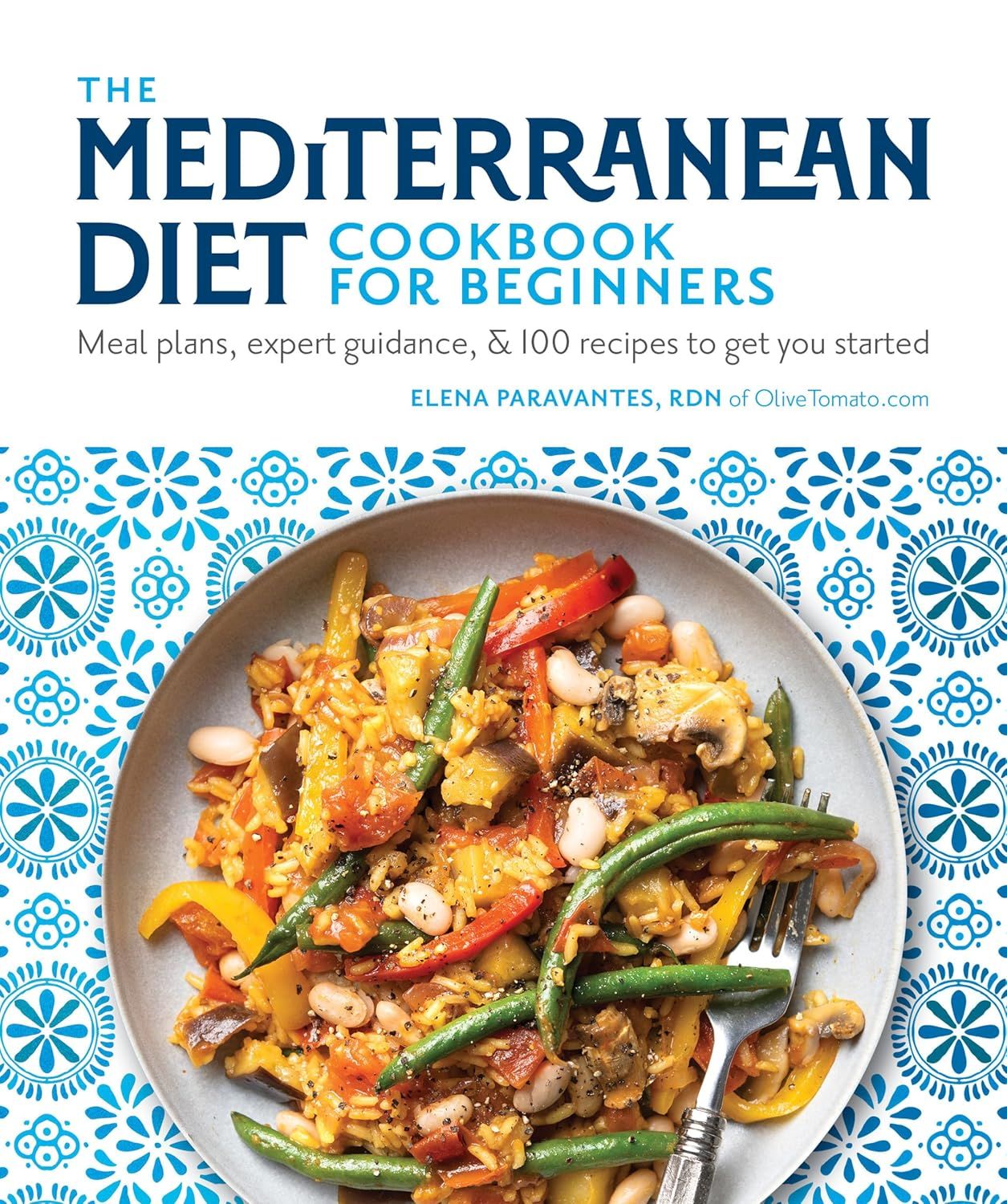 | Discover the secrets of the authentic Mediterranean Diet from award-winning expert and Registered Dietitian, Elena Paravantes MS, RD. Raised on this diet herself, Elena shares 100 of her favorite recipes, alongside a lifetime of expert advice, menu plans, cooking and shopping tips, and a comprehensive lifestyle guide. 100 irresistible recipes, a 14-day meal plan, and practical tips for shopping, cooking, and living the Mediterranean way. Weekly.health may be compensated when you buy. Your purchase helps to support us to continue this newsletter. |
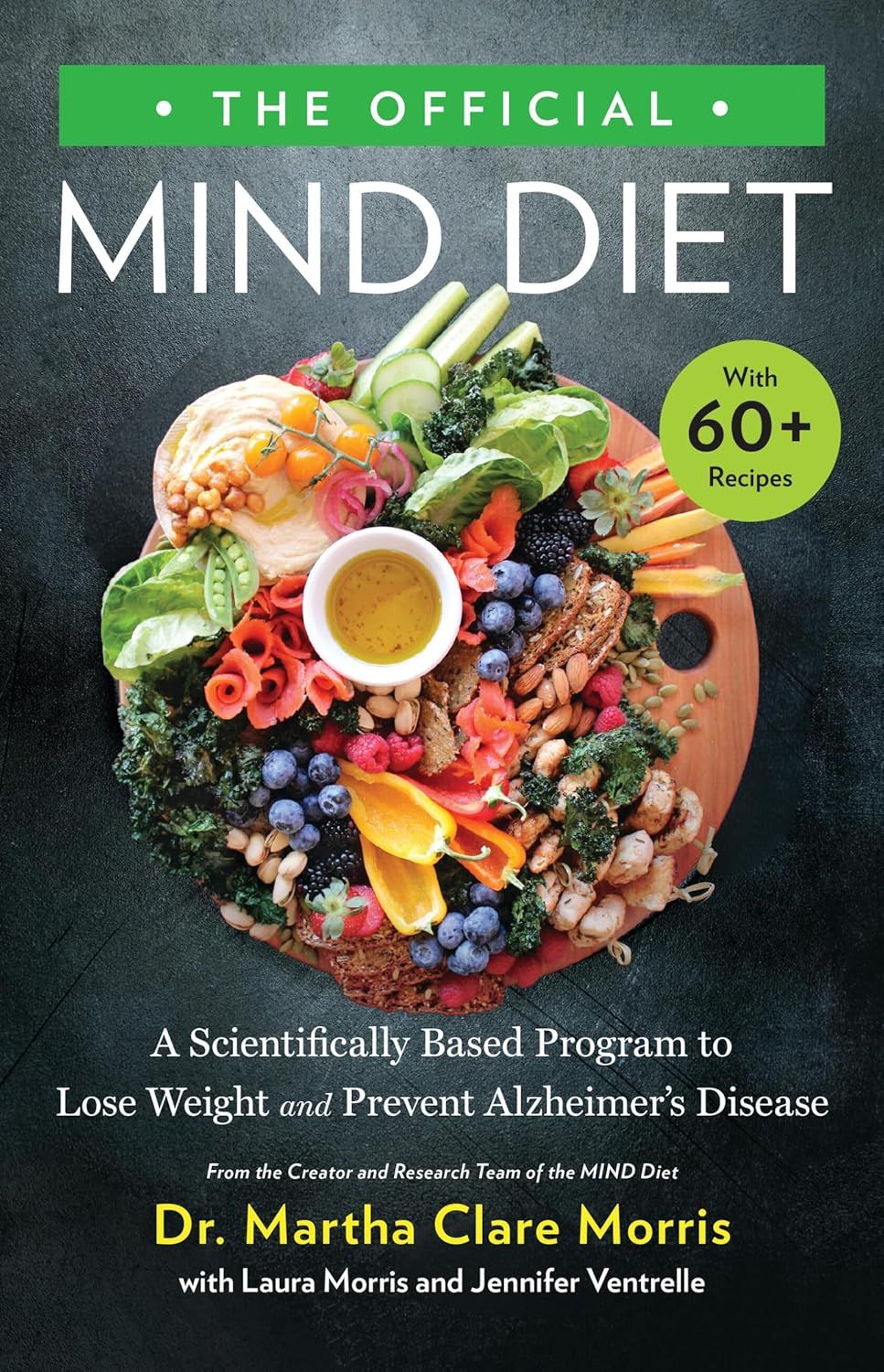 | Dr. Martha Clare Morris's MIND diet took the nutrition world by storm when it revealed the link between diet and cognitive health, particularly as we age. Lauded by scientists, doctors, and organizations like the Alzheimer's Association, AARP, and US News & World Report, the MIND diet, which combines elements of the Mediterranean and DASH diets, offers hope for an easy, non-invasive, and effective way to lose weight, prevent cognitive decline, reduce the risk of developing Alzheimer's disease, and promote vibrant brain health well into advanced age. Weekly.health may be compensated when you buy. Your purchase helps to support us to continue this newsletter. |
🥛 Protein quality matters for heart health in older adults
In a 16-week trial of Singaporean adults aged 60+, adding 20 g/day of protein to a healthy diet helped protect heart health, but the source mattered. Diets enriched with soy or casein protein prevented rises in triglycerides and overall CVD risk seen with diet alone, while soy protein uniquely lowered total cholesterol (~0.3 mmol/L) and showed signs of better blood vessel repair. For older adults, pairing a healthy diet with plant protein may offer extra cardiovascular benefits. (source)
🔥 Calculate your BMR (try our free tool)
Do you know how many calories your body needs just to exist?
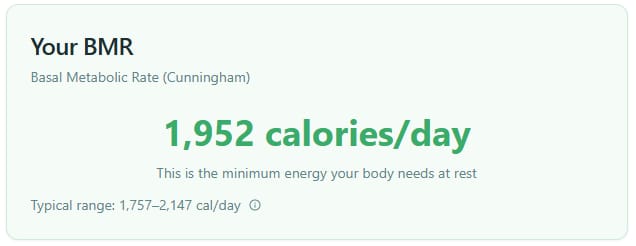
Your basal metabolic rate (BMR) is the number of calories your body burns each day at complete rest — breathing, circulating blood, maintaining organs, repairing cells. No steps. No workouts. Just staying alive.
Why does this matter?
Because BMR is the foundation of almost every nutrition decision:
Trying to lose fat without under-fueling
Eating enough to support muscle, hormones, and recovery
Avoiding “mystery plateaus” where weight or energy stalls
Understanding why two people of the same size can need very different intakes
If you don’t know your BMR, you’re guessing, often by hundreds of calories per day.
I’ve just calculated mine using our BMR calculator over at The Healthspan Academy BMR calculator (screenshot above). It takes less than a minute and gives you a personalised baseline you can actually use, whether your goal is fat loss, muscle, or long-term health and longevity.
Once you know your number, everything else - protein targets, calorie ranges, even meal planning - becomes clearer and far easier to get right.
🟢 Sponsor: Climatize
Are You Ready to Climatize?

Climatize is an investment platform focused on renewable energy projects across America.
You can explore vetted clean energy offerings, with past projects including solar on farms in Tennessee, grid-scale battery storage in New York, and EV chargers in California.
Each project is reviewed for transparency and offers people access to fund development and construction loans for renewable energy in local communities.
As of November 2025, more than $13.2 million has been invested through the platform across 28 renewable energy projects. To date, over $3.6 million has already been returned to our growing investor base. Returns are not guaranteed, and past performance does not predict future results.
Check out Climatize to explore clean energy projects raising capital. Minimum investments start with as little as $10.
Climatize is an SEC-registered & FINRA member funding portal. Crowdfunding carries risk, including loss.
💊 Supplement Deep Dive: Curcumin
Should you be taking taking curcumin supplements?
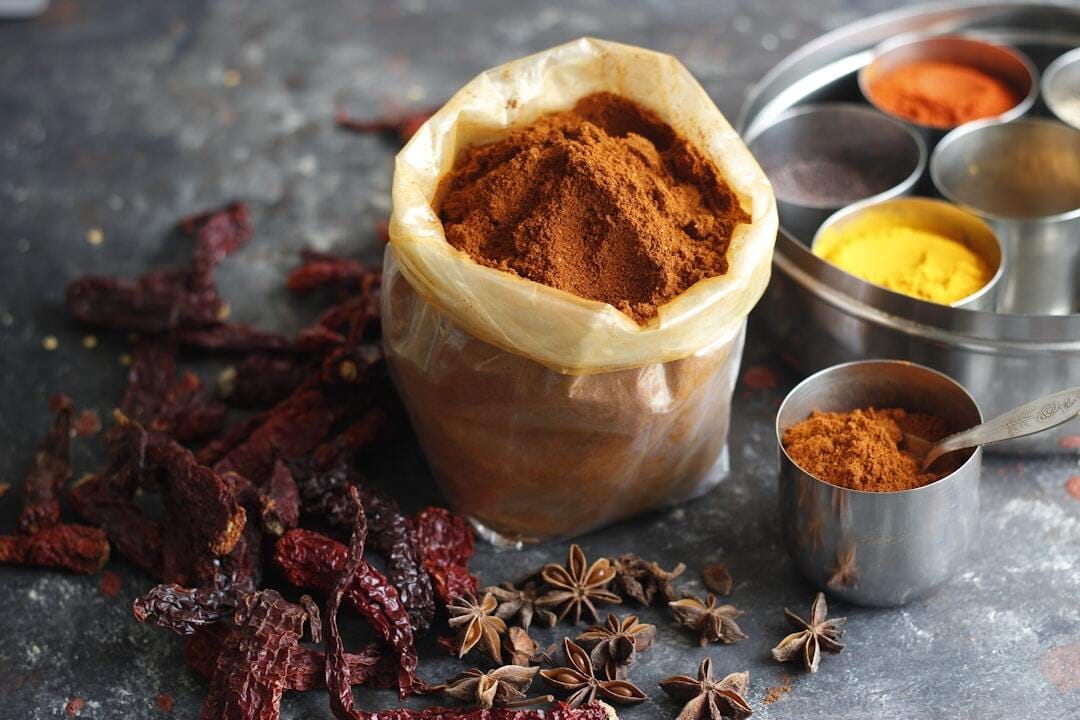
Curcumin is the most-studied active component extracted from turmeric root that is often used in Indian and Southeast Asian cooking.
1-minute verdict
A good add-on for joints and gut, with encouraging mood and memory signals. Across randomised controlled trials (RCTs) and meta-analyses, curcumin reliably helps knee osteoarthritis pain and function (often similar to non-steroidal anti-inflammatory drugs, NSAIDs, over 8–12 weeks). As an add-on to mesalamine/5-aminosalicylic acid (5-ASA) in ulcerative colitis (UC), it substantially increases remission and lowers relapse risk. Early data in rheumatoid arthritis (RA) point the right way, and there are small benefits for depression and working memory in older adults without dementia. Use an enhanced-absorption form or combine with piperine.
Outcomes that matter;
↓ Knee osteoarthritis pain; ↑ function — ~NSAID-like relief over 8–12 weeks at ~1 g/day.
↑ Ulcerative colitis remission when added to mesalamine/5-ASA.
↓ Depressive symptoms (small–moderate); ↓ anxiety symptoms (large but inconsistent).
↑ Working memory improvements but negligible impact on global cognition; Alzheimer’s trials negative.
Time to benefit: Typically 8–12 weeks for joints and mood; UC maintenance benefit shown over 6 months (induction also improved in shorter trials).
Who should avoid / adjust: On anticoagulants/antiplatelets (curcumin has mild anti-platelet activity); on multiple medicines if the product contains piperine (CYP3A4/2C9 interactions - check with a pharmacist/GP).
Upper limit: No official UL. Trials are generally comfortable to ~1.5–3 g/day; ≥4 g/day increases gastrointestinal side-effects and isn’t recommended for chronic use.
Does it actually do anything?
Osteoarthritis (knee). Reviews (including an umbrella analysis) show meaningful reductions in pain and better function on WOMAC scores. Short RCTs often find curcumin similar to ibuprofen or diclofenac for symptom relief at around 1,000 mg/day for 8–12 weeks. Practical upside: some trials report less rescue painkiller use.
Ulcerative colitis (UC). Meta-analysis of six RCTs shows about five-fold higher odds of clinical remission when curcumin is added to mesalamine, plus higher endoscopic remission and mucosal healing. In a 6-month maintenance trial, ~5% on curcumin relapsed vs ~20% on placebo. Doses were 1.5–3 g/day orally; some studies also used curcumin enemas. Use with your gastro team - this is an adjunct, not a replacement.
Rheumatoid arthritis (RA). A 2025 meta-analysis (6 small RCTs; 244 people) found higher ACR20 response (a standard improvement threshold), better Disease Activity Score-28 (DAS28), and lower C-reactive protein (CRP)/erythrocyte sedimentation rate (ESR). Confidence is very low (small, varied trials), but the direction is positive. Treat as an add-on to disease-modifying antirheumatic drugs (DMARDs).
Mood. For depression, a 10-trial meta-analysis shows a small-to-moderate symptom drop and roughly 3× higher odds of clinical response vs placebo; evidence quality is low. Anxiety results are encouraging overall but inconsistent across studies. Think of this as a time-limited add-on trial rather than a stand-alone treatment.
Cognition. Big picture: no benefit on global cognition, but working memory improves. An 18-month study of Theracurmin 90 mg twice daily showed ~28% better memory scores and less amyloid/tau build-up on positron emission tomography (PET) in at-risk adults. Trials in diagnosed Alzheimer’s disease with 2–4 g/day (C3 Complex form) were negative and had more gut side-effects at 4 g/day.
Metabolic & vascular extras. Small trials in type 2 diabetes/metabolic syndrome report lower CRP, modest glycaemic improvements and better endothelial function (healthier vessel responses). Useful bonuses while the joint/gut benefits do the heavy lifting.
Dose & form
Effective dose range (adults): 500–1,500 mg/day curcumin, usually split morning/evening with food. Typical regimens: OA ~1,000 mg/day; RA 0.5–1.5 g/day; UC add-on 1.5–3 g/day; mood ~500 mg twice daily. For the memory trial: Theracurmin 90 mg twice daily (180 mg/day).
Bioavailability (absorption) matters:
Piperine (black pepper extract): 20 mg boosted curcumin exposure by ~20-fold in a human study — handy, but it can also increase levels of certain medicines.
Named technologies such as Meriva® phytosome, Longvida® (solid-lipid), Theracurmin® (nanoparticle) and BCM-95® lift absorption so lower milligram doses can work. Some, like Longvida, may allow curcumin to cross the blood-brain barrier, but more research is needed in humans.
Timing: Take with food (fat helps) and split doses to reduce reflux. For UC, both higher oral doses and enema/topical routes have been used in studies.
Our pick - what to buy
 | Longvida Optimised Curcumin
|
Label check: Do not purchase standard ‘turmeric’ supplements, as the amount of curcumin in this will be negligible. We also recommend against standard curcumin supplements that do not include a bioavailability-enhancer such as piperine or bioperine. We prefer named tech (Meriva®, Longvida®, Theracurmin®, BCM-95®) or secondly any curcumin product that states 95% curcuminoids + 5-20mg piperine; confirm mg curcuminoids per serving (typically, the higher the better) and third-party testing.
Mechanism minute (for the curious)
Curcumin turns down inflammatory signalling (for example NF-κB, IL-6, TNF-α) and acts as an antioxidant. Better-absorbed forms help it reach target tissues, which fits the small clinical gains seen in joints, gut, mood, and working memory.
Safety & cautions
Common: Mild gastrointestinal (GI) upset (reflux, loose stools). Taking with meals and splitting doses helps. High doses (≥4 g/day) increase GI drop-outs.
Medicines: Curcumin has mild anti-platelet effects. Piperine can inhibit CYP3A4/2C9 and raise other drug levels — check with a pharmacist/GP if you take anticoagulants or multiple medicines.
Use as adjunct: In RA and UC, curcumin complements standard care; don’t stop DMARDs or 5-ASA without medical advice.

🛍️ Recommendations
Discover the products, services, and retailers we’ve mentioned in past Weekly Health issues, all in one place so you can explore at your own pace.
🇬🇧 UK Readers Osavi Omega-3 Oil – Contains 2,450mg EPA and DHA per teaspoon Merach Exercise Bike – The exact exercise bike we use at Weekly.health Piper’s Farm – Award-winning 100% grass-fed meats for better flavour and nutrition. Get £10 off your first order. Abel & Cole – Fresh, organic fruit and veg boxes to make healthy eating easier. 50% off your first four boxes. Oddbox – Help fight food waste with weekly deliveries of delicious “wonky” veg. £10 off your first box. Crowdfarming – Adopt a fruit tree and enjoy regular deliveries. Get 10€ credit when you join. Citizens Of Soil – Use code WKLYOLIVE10 for 10% off small-batch, high-antioxidant extra virgin olive oils. The Mediterranean Diet Cookbook For Beginners – 100 irresistible recipes, a 14-day meal plan, and practical tips for shopping, cooking, and living the Mediterranean way. The Official MIND Diet Book: – A scientifically based programme to support weight loss and brain health. Longvida Curcumin Supplement – One of the best-supported curcumin formulas in human studies. Use code weeklyhealth for 15% off £30+. Dash Diet Cookbook For Busy People – Nutritious, 5-ingredient recipes that make healthy eating stress-free. Keto Diet Cookbook – Your 30-day plan to lose weight, boost brain health, and balance hormones. Lifespan by Dr. David Sinclair – One of the world's leading researchers on ageing lays out the science behind why we age and what we can do to slow it down. | 🇺🇸 USA Readers Carlson Finest Fish Oil - Contains 1,300mg EPA and DHA per teaspoon. Merach Exercise Bike – The exact exercise bike we use at Weekly.health Blueprint – Get $25 off high-phenolic extra virgin olive oil. The Mediterranean Diet Cookbook For Beginners – 100 irresistible recipes, a 14-day meal plan, and practical tips for shopping, cooking, and living the Mediterranean way. The Official MIND Diet Book – A scientifically based programme to support weight loss and brain health. Longvida Curcumin Supplement – One of the best-supported curcumin formulas in human studies. Dash Diet Cookbook For Busy People – Nutritious, 5-ingredient recipes that make healthy eating stress-free. Keto Diet Cookbook – Your 30-day plan to lose weight, boost brain health, and balance hormones. Lifespan by Dr. David Sinclair – One of the world's leading researchers on ageing lays out the science behind why we age and what we can do to slow it down. |
Weekly.health may be compensated when you buy something. Your purchase helps to support us to continue this newsletter. We only suggest products or brands we trust and where supported by evidence.
📥 Finding this newsletter useful so far?
Your friends could benefit, too!
It would really help us if you could share Weekly.health with your friends either in person or through social media. You could even just forward this email to them.
Every subscriber helps us towards our goal of improving lives and helping people live longer.
📥 Feedback or suggestions?
We really appreciate any feedback you can give. Your feedback can help shape Weekly.health to change lives.
Reply directly to this email - we'd love to hear from you and we’ll be sure to reply!
🙏 Thanks for Reading!
That’s the end of this issue of Weekly.health.
This newsletter is written by a small, independent team, led by James — who’s been following nutrition science for nearly 20 years and is now working towards a formal, industry-recognised qualification.
We’re based in England, so if you’re over the pond, you might notice a few strange spellings.
Our goal is to make cutting-edge, evidence-based nutrition advice simple, useful, and genuinely applicable to everyday life.
We don’t want to bombard you with adverts, but a few of the links in this email may reward us when you click and make a purchase. This goes towards helping us to continue bringing you this newsletter.
We’ll keep improving with every issue. If you’ve got any feedback or suggestions, we’d love to hear them (just reply to this email).
See you next week!
📖 Glossary of Terms in This Issue (Alphabetical Order)
A–Z Glossary of Technical Terms
Term | Definition |
|---|---|
ACR20 | A standard clinical benchmark in rheumatoid arthritis indicating a ≥20% improvement in symptoms such as pain, swelling, and physical function. |
Alzheimer’s disease | A progressive neurodegenerative condition characterised by memory loss, cognitive decline, and accumulation of amyloid-β plaques and tau tangles in the brain. |
Basal Metabolic Rate (BMR) | The number of calories your body burns per day at complete rest to maintain vital functions such as breathing, circulation, and organ function. |
Bioavailability | The proportion of a nutrient or compound that is absorbed into the bloodstream and available for biological effect. |
Casein protein | A slow-digesting milk protein that provides a sustained release of amino acids, often used to support muscle maintenance. |
C-reactive protein (CRP) | A blood marker of systemic inflammation; elevated levels are linked to cardiovascular disease and other chronic conditions. |
Curcumin | The primary bioactive compound in turmeric, studied for anti-inflammatory, antioxidant, joint, gut, and cognitive effects. |
CYP3A4 / CYP2C9 | Liver enzymes involved in drug metabolism; inhibition (e.g., by piperine) can increase blood levels of certain medications. |
DAS28 | Disease Activity Score based on 28 joints; a composite measure used to assess rheumatoid arthritis severity. |
Endothelial function | The ability of blood vessels to dilate and respond appropriately, reflecting vascular health and cardiovascular risk. |
IL-6 (Interleukin-6) | A pro-inflammatory cytokine involved in immune responses, ageing, and chronic disease processes. |
Mediterranean diet | A dietary pattern rich in vegetables, fruits, whole grains, olive oil, legumes, and fish, associated with cardiovascular and cognitive benefits. |
Mesalamine (5-ASA) | An anti-inflammatory medication commonly used to treat ulcerative colitis by reducing inflammation in the gut lining. |
MIND diet | A hybrid of the Mediterranean and DASH diets designed to support brain health and reduce the risk of cognitive decline. |
NF-κB | A key inflammatory signalling pathway that regulates immune responses and is implicated in ageing and chronic disease. |
NSAIDs | Non-steroidal anti-inflammatory drugs (e.g., ibuprofen, diclofenac) used to relieve pain and inflammation. |
Positron Emission Tomography (PET) | An imaging technique that visualises metabolic activity in tissues, often used to assess amyloid and tau in brain studies. |
Potassium-enriched salt | A salt substitute that partially replaces sodium with potassium to help lower blood pressure and cardiovascular risk. |
RCT (Randomised Controlled Trial) | A gold-standard study design where participants are randomly assigned to interventions to assess cause-and-effect relationships. |
SMI (Skeletal Muscle Index) | A measure of muscle mass relative to height, commonly used to assess sarcopenia and muscle health. |
Ulcerative colitis (UC) | A chronic inflammatory bowel disease affecting the colon and rectum, causing ulcers, bleeding, and digestive symptoms. |
WOMAC score | A validated questionnaire assessing pain, stiffness, and physical function in osteoarthritis. |
Want to start your own newsletter like this? Join Beehiiv.
Reply